Memory Care · Pierce County
Dignity, structure, safety.
We place families into dementia-specialty AFHs, secured ALF memory-care units, and standalone memory-care communities across Pierce County and South King County.

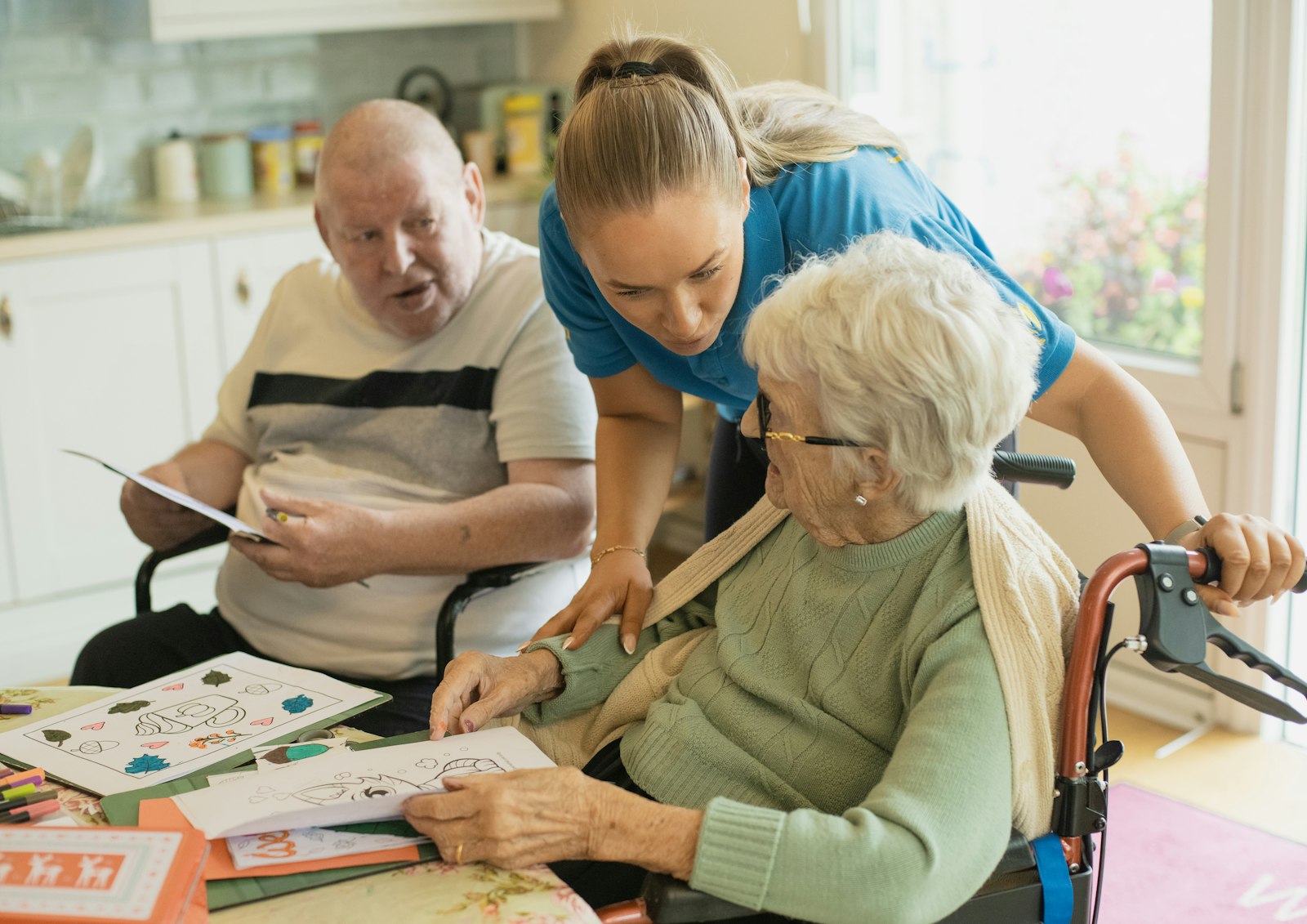
What memory care actually means
A specialty designation — not a separate license type.
In Washington, an adult family home can carry a Dementia specialty designation under WAC 388-76 — different from a general license and requiring additional caregiver training plus an environment review by DSHS.
Larger memory care is typically delivered inside an assisted living facility’s secured unit, governed by WAC 388-78A, with locked exterior doors, wander guards, and staff trained on redirection, validation therapy, and reminiscence techniques.
Pierce County families choose between three setting types: a dementia-specialty AFH (small, home-like, 6 residents), a secured memory care unit inside a traditional ALF (medium-sized, more amenities, higher cost), or a standalone memory care community (purpose-built, highest ratio, highest cost).
Which stage calls for which setting
Dementia progression drives the decision — not amenities.
MCI / Early stage
Mild cognitive impairment usually doesn't require memory care. Home care or independent living often works. Safety risk is low.
Mild to moderate
Still social, follows a daily routine with prompts, doesn't wander frequently — a good fit for a dementia-specialty AFH.
Exit-seeking / elopement
When a resident has tried to leave twice in a month or wanders at 3am, a secured perimeter becomes non-negotiable.
Severe / advanced
Advanced dementia with complex behaviors or round-the-clock supervision needs — standalone memory care or a high-support AFH with hospice coordination.
What good memory care looks like
Behavioral, not architectural.
On a tour, watch for staff redirecting without confronting. Look for meaningful activities over filler. Pay attention to caregiver turnover.
How we build a memory care shortlist
Stage first, then budget, then geography.
Our shortlist starts with the resident’s current stage (MCI vs moderate vs severe), current behaviors (social, withdrawn, exit-seeking, aggressive), and the family’s budget path.
Then we narrow by geography — we aim to keep every option within a 20-minute drive of the family’s current home. The strongest predictor of resident well-being in memory care is how often family visits happen.
Dementia-specialty AFHs in Pierce County cluster in North End Tacoma, University Place, South Tacoma, and the Lakewood corridor. Secured ALF memory care units are concentrated in Tacoma, Puyallup, and Federal Way. Standalone memory care communities are fewer.
Common questions
Common questions about memory care
Only if the home carries a Dementia specialty designation under WAC 388-76. Specialty-designated homes have additional caregiver training and environmental requirements.
Yes, through the COPES waiver — for residents meeting functional eligibility (CARE assessment) plus financial criteria. 2026 asset limit $2,000; income limit $2,901/month.
Night-time exit-seeking is one of the clearest signals for a secured memory care setting. See our wandering and exit-seeking page.
Common triggers: unsafe event at home, caregiver burnout in the family, a hospital stay followed by a recommendation for 24/7 care, or a diagnosis progression that the primary-care physician says is beyond home-care scale.
Start here
Start your memory care search.
Tell us about your parent and the current stage. We’ll build a shortlist.